The Numbers Behind the Mortgage Squeeze: ABS Data Every Borrower Should See

In this article
The April 2026 Economic Scorecard
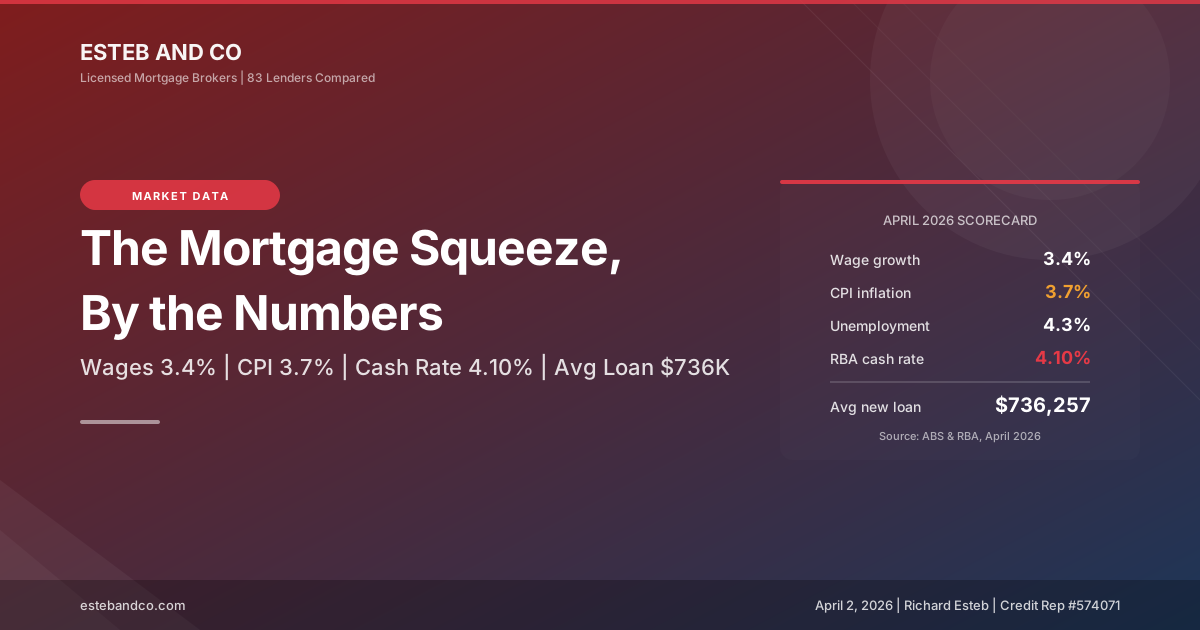
Forget the headlines. Here are the numbers that actually determine what happens to your mortgage. All data from the ABS and RBA, current as of April 2, 2026.
| Metric | Current Value | Direction | What It Means for You |
|---|---|---|---|
| RBA Cash Rate | 4.10% | Up 0.50% since Jan | Variable rates up ~$218/month on avg loan |
| CPI Inflation | 3.7% | Sticky, above target | No rate cuts until this drops below 3% |
| Trimmed Mean Inflation | 3.3% | Still above 2–3% band | The RBA watches this more than headline CPI |
| Wage Growth (WPI) | 3.4% | Slowing | Your pay rise doesn’t cover inflation |
| Unemployment | 4.3% | Up from 4.1% | Job market softening — but not collapsing |
| AUD/USD | $0.688 | Down 2.18% in a month | Imports (fuel, goods) cost more |
| Brent Crude Oil | $105–109/bbl | Volatile, elevated | Fuel & transport costs won’t ease soon |
| Avg New Mortgage | $736,257 | Up 10.5% YoY | Australians are borrowing more despite hikes |
The story these numbers tell is clear: costs are rising faster than incomes, rates are going up not down, and relief is not coming soon.
Wages vs Inflation: You’re Going Backwards
This is the most important chart for any borrower right now. ABS wage growth is 3.4% per year. CPI inflation is 3.7%. That means real wages are going backwards by 0.3% per year.
To put that in dollar terms:
| Household Income | Annual Pay Rise (3.4%) | Annual Cost Increase (3.7%) | Net Position |
|---|---|---|---|
| $80,000 | +$2,720 | −$2,960 | −$240/year |
| $120,000 | +$4,080 | −$4,440 | −$360/year |
| $180,000 | +$6,120 | −$6,660 | −$540/year |
And that’s before accounting for the back-to-back rate hikes. The RBA lifted rates by 0.50% in two months (February and March). On the average $736,000 mortgage, that adds roughly $218 per month in repayments — or $2,616 per year.
So a household on $120,000 got a $4,080 pay rise but faces $4,440 in higher living costs plus $2,616 in higher mortgage repayments. They’re $2,976 worse off than this time last year.
What the Average Mortgage Actually Costs Now
The average new owner-occupier loan in Australia is now $736,257. Here’s what that costs per month at different rates:
| Interest Rate | Monthly Repayment | Total Interest (30yr) | Who’s Paying This |
|---|---|---|---|
| 5.54% (best non-bank) | $4,186 | $770,780 | New customers at La Trobe, Macquarie |
| 5.99% (Big 4 new rate) | $4,413 | $852,533 | New CBA/NAB customers |
| 6.50% (loyalty rate) | $4,652 | $938,580 | Existing borrowers who haven’t refinanced |
| 7.00% (assessment rate) | $4,896 | $1,026,445 | Nobody — this is what lenders test you at |
The difference between the best non-bank rate and a typical loyalty rate is $466 per month — or $5,592 per year. Over 5 years, that’s $27,960 you’re giving away by not switching.
The loyalty tax in action
If you’ve been with the same bank for 3+ years and haven’t renegotiated, you are almost certainly paying 0.50%–1.50% more than their best advertised rate. Banks reward new customers and quietly charge existing ones more. This is not a conspiracy — it’s their business model.
Where Inflation Is Hitting Hardest
Not all inflation is created equal. Here’s what the ABS CPI breakdown shows for the 12 months to February 2026:
| Category | Annual Change | Impact on Borrowers |
|---|---|---|
| Electricity | +37.0% | Government rebates ending, wholesale prices up |
| Housing | +7.2% | Rents, insurance, maintenance all rising |
| Recreation | +4.1% | Travel, entertainment, streaming services |
| Food & non-alcoholic beverages | +3.1% | Fuel costs flowing through to food supply chain |
| Transport | Elevated | Fuel at $2.53/L driving this category |
| All groups CPI | +3.7% | Above 2–3% target — no rate cuts |
The two biggest contributors — electricity and housing — are not going away. Electricity rebates are expiring, and rents are being driven by record-low vacancy rates. These are structural, not temporary.
For the RBA, this means the inflation problem is broader than just fuel. Even if oil prices fell tomorrow, CPI would still be above the 2–3% target because of housing and electricity costs.
The Jobs Picture: Good News With a Warning
February unemployment came in at 4.3%, up from 4.1% in January — above market expectations. But context matters:
- 48,900 new jobs were created in the month — a strong number
- The participation rate rose to 66.9% — more people are entering the workforce
- Unemployment rose because more people are looking for work, not because jobs are disappearing
That said, the trend is worth watching. If unemployment keeps rising while inflation stays elevated, we get stagflation — and the RBA has limited tools to deal with that.
For borrowers, the practical implication is: don’t assume your income is guaranteed. If you’re stretching to maximum borrowing capacity, build in a buffer for the possibility that hours get cut or bonuses shrink.
Rate Outlook: When Will Relief Come?
Here’s the honest answer based on what the data tells us:
| Date | Event | What to Watch |
|---|---|---|
| April 29 | March monthly CPI release | If above 3.5%, May hike is likely |
| May 5 | Next RBA decision | Another hike possible if CPI stays hot |
| May 13 | March quarter WPI | Wage growth direction |
| Mid 2026 | Inflation expected to peak | RBA forecast: ~4.2% headline |
| Late 2026 / 2027 | Earliest possible rate cut | Only if trimmed mean drops below 3% |
The RBA has been explicit: no predetermined path. But reading between the lines, rate cuts are not coming in 2026. The March statement flagged “material risk that inflation will remain above target for longer than previously anticipated.”
Plan for rates to stay at 4.10% or higher through the rest of this year.
How does your rate compare to the market?
See what 50 lenders would offer you right now. 60 seconds, no cost to start, no credit check at this stage.
Check My RateYour 5-Point Action Plan
1. Know your number
Log into your bank app right now and check your actual interest rate. Not the one you signed up at — the one you’re paying today. If it’s above 6.00%, you’re almost certainly overpaying. Write it down.
2. Compare across the whole market
Don’t just negotiate with your current bank. The best rates are with lenders your bank hopes you never hear about. A broker can search 50–50 lenders in minutes. The gap between the best and worst rates right now is over 1.50%.
3. Build a buffer
With wages going backwards in real terms and the RBA potentially hiking again in May, now is the time to build a financial buffer. Aim for at least 3 months of repayments in your offset or savings. If you don’t have an offset account, that should be your first move.
4. Get strategic about your loan structure
This isn’t the time for a set-and-forget mortgage. Consider:
- Offset account: Every dollar in your offset reduces the interest you pay daily
- Split loan: Fix part for certainty, keep part variable for flexibility
- Non-bank lender: Lower rates AND lower serviceability buffers
5. If you’re buying, don’t overextend
Lenders will approve you for a certain amount. That doesn’t mean you should borrow it all. In an environment where real wages are falling, unemployment is rising, and rates could go higher, borrowing to your absolute maximum is risky. Leave room in your budget for things to get worse before they get better.
Frequently Asked Questions
Are Australian wages keeping up with mortgage costs?
No. ABS data shows wage growth at 3.4% per year but inflation at 3.7% and mortgage rates up 50 basis points in two months. Real wages are going backwards, meaning the average borrower has less purchasing power than a year ago even if they got a pay rise.
What is the average Australian mortgage repayment in 2026?
The average new owner-occupier loan is $736,257. At current variable rates around 6.0%, that’s approximately $4,414 per month over 30 years. NSW is highest at roughly $4,955/month, Tasmania lowest at $2,846/month.
How does inflation affect my home loan?
Inflation above the RBA’s 2–3% target forces the RBA to keep rates high (currently 4.10% cash rate). This translates to variable mortgage rates of 5.50–6.50%. Until inflation falls back within target — forecast for mid-2027 at the earliest — rate cuts are unlikely.
Should I be worried about unemployment rising to 4.3%?
4.3% is still relatively low by historical standards, and 48,900 new jobs were created in February. But the trend is worth watching. If unemployment rises further while inflation stays high, it creates a stagflationary environment where the RBA has limited tools to help.
When will the RBA cut rates?
Based on current data, the earliest realistic window for a rate cut is late 2026, and many economists are pushing that out to 2027. The RBA needs trimmed mean inflation sustainably back within the 2–3% band before it will ease. With oil, housing, and electricity all driving prices higher, that’s not happening soon.
Disclaimer: This article provides general information only and does not constitute financial advice. Your personal circumstances may differ. Esteb & Co Pty Ltd (ACN 690 323 687). Credit Representative #574070 is authorised under Australian Credit Licence #389328 held by Connective Credit Services Pty Ltd. Credit Representative Richard Esteb #574071.
See where you stand
Compare your options across our panel of 50 lenders in about 2 minutes. Free, and it won’t affect your credit score.
Start complimentary assessment →No obligation · Richard Esteb, Credit Rep #574071
Richard Esteb
Ricky founded Esteb & Co to give everyday Australians access to the same loan comparison technology used by the big banks. He compares products from a panel of 50 lenders to find the right fit for each client’s situation.