Australian Loan Application Trends Q1 2026: What Borrowers Are Actually Searching For

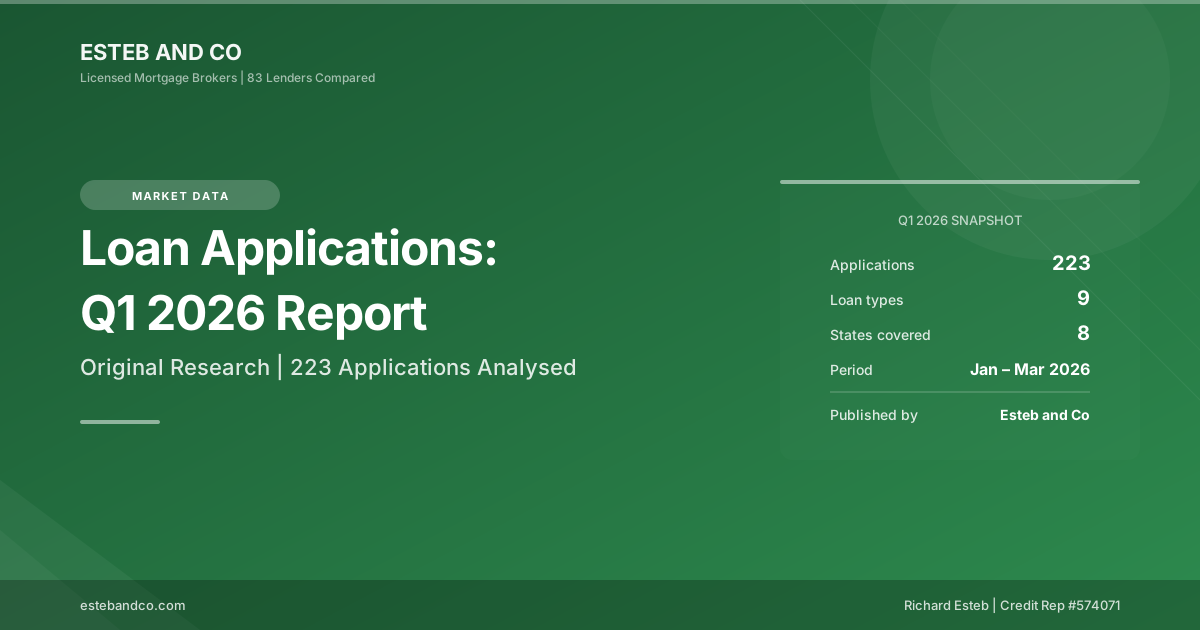
Methodology: This data comes from 223 anonymised loan comparison applications submitted through our platform between January 1 and March 24, 2026. All personal details have been removed. Data reflects borrower intent at the enquiry stage, not approved loans.
What Australians Are Borrowing For in Q1 2026
Home loans remain the dominant loan type at 52% of all enquiries, but personal loans represent a surprisingly large 30% of demand. The average home loan enquiry is $543,968 while personal loan enquiries average just $14,104.
| Loan Type | Share of Enquiries | Average Amount | Avg Completion Rate |
|---|---|---|---|
| Home Loans | 52% (117 enquiries) | $543,968 | 47% |
| Personal Loans | 30% (66 enquiries) | $14,104 | 82% |
| Business Loans | 6% (14 enquiries) | $1,135,625 | 47% |
| Car Loans | 4% (8 enquiries) | $38,800 | 42% |
| SMSF Loans | 4% (8 enquiries) | $407,500 | 24% |
| Private Lending | 3% (6 enquiries) | $1,002,000 | 37% |
| Other | 2% | Various | Various |
Key finding: Personal loans have the highest form completion rate
82% of personal loan seekers complete our comparison form versus just 47% for home loans. This suggests personal loan borrowers have more urgency and clearer intent — they know what they need and want to compare options quickly. Home loan borrowers are more likely to be in early research mode.
Credit Profiles of Australian Borrowers
Among borrowers who disclosed their credit history, the distribution is relatively even across credit bands, with a notable cluster of borrowers self-reporting "poor" credit.
| Self-Reported Credit | Share | Most Common Loan Type |
|---|---|---|
| Excellent | 30% | Home loans ($500k+ avg) |
| Poor | 27% | Personal loans ($15k avg) |
| Fair | 22% | Personal loans ($20k avg) |
| Good | 21% | Home loans ($350k avg) |
Key finding: 27% of borrowers self-report poor credit
More than 1 in 4 loan seekers believe they have poor credit. This is significantly higher than the general population average, suggesting that people with credit concerns are more actively seeking broker assistance rather than going directly to a bank. These borrowers benefit most from broker comparison, as specialist non-bank lenders can offer options that major banks will not.
Employment Types Among Borrowers
| Employment | Share | Avg Loan Amount |
|---|---|---|
| PAYG (Full/Part Time) | 76% | $287,000 |
| Self-Employed | 19% | $612,000 |
| Casual | 4% | $185,000 |
| Contract | 1% | $335,000 |
Key finding: Self-employed borrowers seek 2x larger loans
Self-employed borrowers average $612,000 in loan enquiries versus $287,000 for PAYG employees. These borrowers face additional documentation requirements (2 years of tax returns, BAS) and often need non-bank lenders that specialise in alt-doc or low-doc loans.
Weekly Application Volume Trend
Application volume spiked sharply in late February, driven by increased Facebook and Instagram advertising. The highest week saw 62 applications. Volume is seasonal with a dip in early January and stronger activity from February onward.
| Week | Applications | Converted (Email Captured) | Conversion Rate |
|---|---|---|---|
| Jan 1-5 | 3 | 3 | 100% |
| Feb 17-23 | 33 | 21 | 64% |
| Feb 24-Mar 2 | 60 | 30 | 50% |
| Mar 3-9 | 34 | 20 | 59% |
| Mar 10-16 | 17 | 9 | 53% |
| Mar 17-23 | 62 | 13 | 21% |
Key finding: RBA announcement week drives traffic but not conversions
The week of the RBA's March 17 rate hike saw the second-highest traffic (62 applications) but the lowest conversion rate (21%). This suggests rate hike news drives curiosity clicks rather than serious loan seekers. In contrast, quieter weeks with lower volume see conversion rates of 50-64%.
Traffic Source Quality
| Source | Enquiries | Avg Lead Quality Score |
|---|---|---|
| Instagram Paid | 14 | 56/100 |
| Referral | 19 | 47/100 |
| Facebook Paid | 113 | 45/100 |
| Direct | 65 | 30/100 |
| Organic Social | 12 | 12/100 |
Key finding: Instagram produces the highest quality leads
Despite Instagram generating only 14 enquiries versus Facebook's 113, Instagram leads average a quality score of 56 compared to Facebook's 45. This aligns with industry research showing Instagram users have higher purchase intent on financial products. For brokers considering ad spend allocation, Instagram may offer better ROI per lead despite lower volume.
Compare your loan options from 50 lenders
Free. 60 seconds. No credit check at this stage.
Start ComparingMethodology and Data Notes
This data is derived from 223 anonymised loan comparison applications submitted through Esteb and Co's online comparison platform between January 1 and March 24, 2026. Applications include both completed and partially completed submissions. All personal identifying information has been removed. Lead quality scores are calculated using a proprietary scoring model that weights contact completeness, financial data quality, engagement signals, and credit indicators.
This data is published under CC BY 4.0. You are free to cite and republish with attribution to Esteb and Co (estebandco.com).
Disclaimer: This data reflects enquiry-stage intent and does not represent approved or settled loans. Esteb & Co Pty Ltd (ACN 690 323 687). Credit Representative #574070, ACL #389328 (Connective).
See where you stand
Compare your options across our panel of 50 lenders in about 2 minutes. Free, and it won’t affect your credit score.
Start complimentary assessment →No obligation · Richard Esteb, Credit Rep #574071
Richard Esteb
Ricky founded Esteb & Co to give everyday Australians access to the same loan comparison technology used by the big banks. He compares products from a panel of 50 lenders to find the right fit for each client’s situation.