Building Approvals Surge to 4-Year High: What It Means for Construction Loans in 2026

In this article
- The numbers: building approvals hit a 4-year high
- Houses vs apartments: where the growth is
- What’s driving the construction boom
- The government’s 1.2 million homes target
- What this means for construction loan borrowers
- How construction loans work in 2026
- Tips for getting a construction loan approved
- Frequently asked questions
The Numbers: Building Approvals Hit a 4-Year High
The latest ABS Building Approvals data paints a picture of a construction sector that’s finally waking up. Total dwelling approvals have surged to their highest level in four years, signalling a significant pickup in new housing construction activity heading into 2026.
The headline numbers from the December quarter 2025:
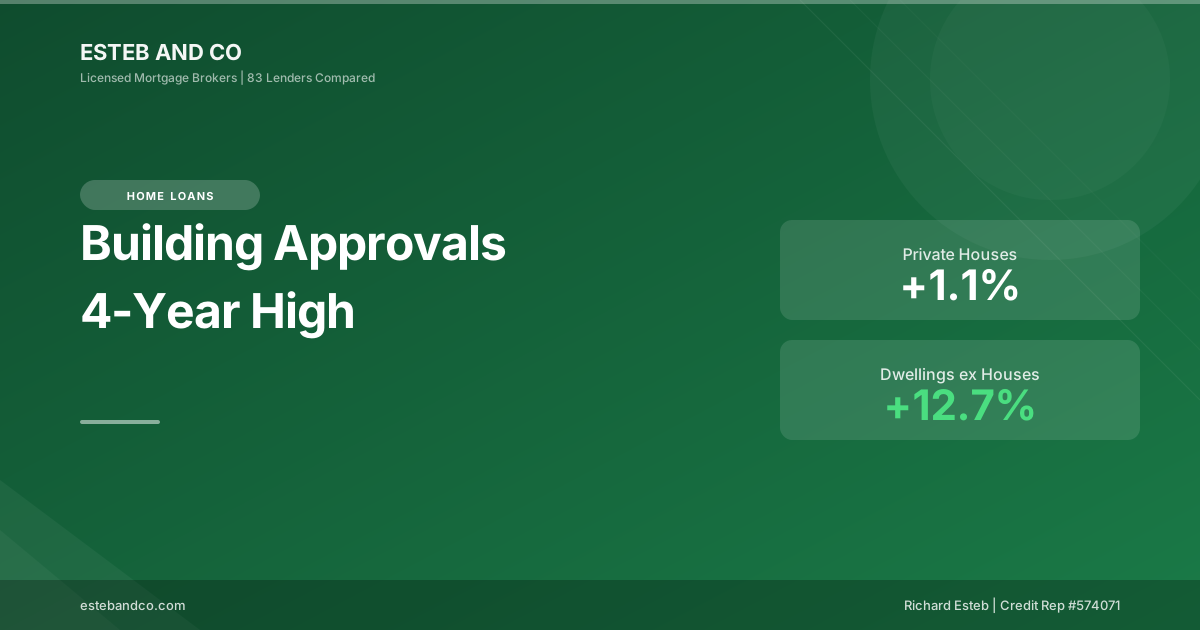
- Private house approvals: Up 1.1% for the month
- Dwellings excluding houses: Up 12.7% (apartments, townhouses, units)
- Total approvals: Highest level since late 2021
The standout figure is the 12.7% surge in non-house dwellings. After years of apartment developers sitting on the sidelines due to rising construction costs and funding challenges, the pipeline is opening up again. This is exactly what the market needs — more medium and high-density housing where supply shortages are most acute.
Australia hasn’t seen this level of building approval activity since the construction boom of late 2021. If these approvals translate into completions, we could see meaningful relief in housing supply by 2027-2028.
Houses vs Apartments: Where the Growth Is
The data tells two different stories depending on what type of dwelling you’re looking at:
Detached houses: steady but modest
Private house approvals grew 1.1% — positive but not spectacular. The detached housing market has been constrained by several factors:
- Land availability: Greenfield land releases have slowed in most capital cities
- Land prices: Average land prices have risen 8-12% over the past year in growth corridors
- Builder capacity: Many builders are still working through existing pipelines and struggling with labour shortages
- Fixed-price contract difficulties: Builders remain cautious about quoting fixed prices given material cost volatility
Apartments and townhouses: the real story
The 12.7% jump in non-house dwellings is where the action is. Several factors are driving this:
- Institutional investors are returning to the build-to-rent sector
- Government incentives are making medium-density projects more viable
- Rezoning in inner and middle-ring suburbs is creating new development opportunities
- Population growth is creating strong demand for higher-density living near transport and employment
For borrowers, this distinction matters. If you’re looking at a house-and-land package in the outer suburbs, competition for builders and land is moderate but costs remain elevated. If you’re buying off-the-plan in a new apartment development, there’s more product coming to market — which could give you more negotiating power.
What’s Driving the Construction Boom
The approval surge didn’t happen in a vacuum. Several converging forces are pushing more projects through the pipeline:
1. Population growth and housing shortage
Australia’s population has been growing at around 2% annually, driven by strong immigration. The National Housing Supply Council estimates a shortfall of approximately 100,000 dwellings nationally. Rents have risen 30-40% in many capital city markets since 2022, creating urgent demand for new supply.
2. Construction costs stabilising
After two years of runaway cost inflation (materials, labour, site costs), the rate of increase is finally moderating. While costs haven’t fallen, they’re no longer rising at 15-20% per year. This makes it easier for developers and builders to confidently price new projects.
3. Government programs
Federal and state governments have introduced various programs to stimulate construction, including fast-tracked planning approvals, tax incentives for build-to-rent developments, and expanded first home buyer grants for new builds.
4. Investment appetite
With ABS data showing investment lending surging 31.8% year-on-year to $42.9 billion, investor money is flowing back into property. Some of this is going into new construction, particularly in the townhouse and small apartment segment.
The Government’s 1.2 Million Homes Target
The federal government’s National Housing Accord set an ambitious target of 1.2 million new homes over five years, which works out to approximately 240,000 dwellings per year. Are we on track?
The short answer: not yet, but the trend is improving.
Current annualised approval rates are running at approximately 175,000-190,000 dwellings — still well below the 240,000 target. And approvals don’t always translate into completions (historically, about 85-90% of approved projects actually get built).
However, the surge in apartment and townhouse approvals is a positive signal. The gap between target and reality is most likely to be closed through higher-density development rather than detached houses — and that’s exactly what the data shows accelerating.
What it means for home prices
More supply should, in theory, moderate price growth. But the lag between approval and completion means any meaningful impact on housing affordability is 18-24 months away. In the meantime, strong demand (immigration, low unemployment, investment appetite) continues to put upward pressure on prices in most markets.
What This Means for Construction Loan Borrowers
If you’re planning to build in 2026, the approvals surge has both positive and negative implications:
The good news
- More builder options: As the pipeline grows, new builders are entering the market and existing builders are expanding capacity
- Competition among builders: More activity can mean more competitive quoting, particularly for standard house designs
- Government incentives: First home buyer grants for new builds, stamp duty concessions, and the Home Guarantee Scheme can significantly reduce upfront costs
- Lender appetite: Banks are keen to write construction loans, with some offering interest rate discounts for new builds
The challenges
- Builder availability: With approvals surging, popular builders may have longer wait times (6-12 months before construction can start)
- Material cost risk: While costs have stabilised, a construction boom could push materials prices up again — insist on a fixed-price contract
- Labour shortages: The construction sector is still short approximately 90,000 workers nationally, which can extend build timelines
- Land prices: In growth corridors, land prices are trending up as demand increases
How Construction Loans Work in 2026
Construction loans work differently from standard home loans. Here’s what you need to know:
Progressive drawdowns
Unlike a regular home loan where you get the full amount upfront, construction loans release funds in stages as building progresses. The standard five stages are:
- Slab/Base: ~15% of build cost — paid when the concrete slab or base is poured
- Frame: ~20% — when the structural frame is erected
- Lock-up: ~20% — when the building is enclosed (roof, windows, doors)
- Fit-out: ~30% — internal works (plumbing, electrical, plastering, cabinetry)
- Completion: ~15% — when the build is finished and a certificate of occupancy is issued
During construction, you typically pay interest only on the amount that’s been drawn — so your repayments start low and increase as each stage is completed. Once the build is finished, the loan converts to a standard home loan (principal and interest).
Current construction loan rates
Construction loan rates in 2026 are broadly similar to standard home loan rates, with some variation:
- Variable rates: From ~5.49% (comparable to standard home loans)
- Fixed-rate options: Some lenders offer fixed rates during the construction period (from ~5.30%)
- Owner-builder: Typically 0.5-1.0% higher than standard construction loans due to higher risk
For a comprehensive breakdown, read our construction loans guide.
Tips for Getting a Construction Loan Approved
Based on my experience helping hundreds of clients through the construction loan process, here are the key success factors:
1. Get a fixed-price building contract
This is non-negotiable in 2026. Lenders require a fixed-price contract to approve a construction loan, and you need one to protect yourself from cost blowouts. Avoid any builder who won’t commit to a fixed price.
2. Choose a registered, insured builder
Lenders will check that your builder is appropriately licensed and insured. Home warranty insurance is mandatory in most states. Choosing a builder who’s been operating for 5+ years with a clean record makes the lending process smoother.
3. Have your land settled (or ready to settle)
For house-and-land packages, most lenders prefer the land to be settled before releasing construction funds. If you’re buying land separately, factor settlement timelines into your planning.
4. Budget for the unexpected
Even with a fixed-price contract, there are costs that sit outside the building contract: landscaping, fencing, driveways, window treatments, and council connection fees. Budget an additional 10-15% above your building contract for these items.
5. Talk to a broker before signing anything
Construction loans are more complex than standard home loans, and not all lenders handle them well. A broker who specialises in construction lending can help you navigate the process, find the right lender, and avoid common pitfalls. Our service is complimentary — learn how brokers work.
Frequently Asked Questions
What are the latest building approval numbers in Australia?
ABS data shows building approvals hit a 4-year high in the December quarter 2025. Private house approvals were up 1.1% while dwellings excluding houses (apartments, townhouses, units) surged 12.7%. This is the strongest approval activity since late 2021.
How do building approvals affect home prices?
More approvals eventually increase housing supply, which can moderate price growth. However, there’s a 12-24 month lag from approval to completion. The current surge may help ease housing supply constraints by 2027-2028, but short-term price impacts are limited.
Is now a good time to get a construction loan?
It depends on your situation. The surge in approvals means builders may be busier, potentially extending timelines. However, locking in now protects against further rate hikes. A fixed-price contract is essential. Construction loan rates start from around 5.49% variable. Read our full construction loan guide.
What is the National Housing Accord target?
The federal government targets 1.2 million new homes over five years (240,000/year). Current annualised approvals are running at 175,000-190,000 — improving but still below target. The apartment/townhouse surge is helping close the gap.
How do construction loans work differently from regular home loans?
Construction loans use progressive drawdowns — the lender releases funds in five stages as building progresses (slab, frame, lock-up, fit-out, completion). You pay interest only on the amount drawn during construction. Once complete, it converts to a standard home loan.
See where you stand
Compare your options across our panel of 50 lenders in about 2 minutes. Free, and it won’t affect your credit score.
Start complimentary assessment →No obligation · Richard Esteb, Credit Rep #574071
Richard Esteb
Ricky founded Esteb & Co to give everyday Australians access to the same loan comparison technology used by the big banks. He compares products from a panel of 50 lenders to find the right fit for each client’s situation.